
Biodiversity impact indicators
- the impact of forestry in Northern forests
We have six biodiversity impact indicators to monitor the quality of harvesting operations in Finland, Sweden, and the Baltics. The indicators give insight into how well we are able to mitigate negative impacts on biodiversity in harvesting. All six indicators are similar in Finland and Sweden, and four of them are also applicable in the Baltics. Our short-term target is that 90% of audited harvesting sites should comply with the standards set for each indicator. Our ultimate target is to reach 100% approved sites in 2030.
The data is collected from randomly selected harvesting site samples that are audited in each of the regions annually. For streamlined data flow, the data is reported via a digital tool in the field. In 2024, we also finalised our harmonisation process, and all the indicators are now harmonised across Finland, Sweden, and the Baltics. In case harmonisation has required changes in the indicator monitoring, this is disclosed clearly in connection with the reporting for that indicator.
In 2025, the overall weighted average showed a slight improvement, but some indicators remained below the target level, as shown in the table below. Going forward, the focus will continue on all indicators, but particular attention will be given to those not meeting the target.
|
Indicator |
2025 |
2024 |
2023 |
2022 |
2021 |
|
High stumps |
92% |
82% |
84% |
65% |
63% |
|
Ground deadwood |
87% |
83% |
81% |
82% |
94% |
|
Soil and water |
88% |
94% |
96% |
96% |
88% |
|
Prioritized habitats |
93% |
96% |
98% |
87% |
88% |
|
Tree retention |
89% |
85% |
87% |
83% |
89% |
|
Buffer zones |
94% |
93% |
91% |
93% |
- |
|
Total |
91% |
89% |
90% |
86% |
87% |
In this table, you can see the weighted average of the biodiversity impact indicators in Finland, Sweden, and the Baltics (Estonia, Latvia, Lithuania). The performance is weighted across the regions using total harvested volume from each region as a basis. Region-specific performance can be viewed below.
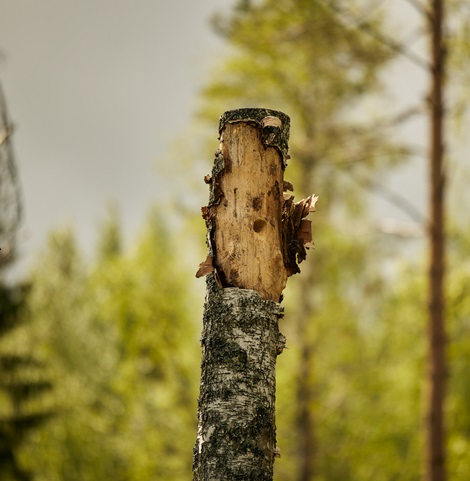
High stump creation
High stumps are trees cut at a few meters’ height to increase the amount of standing deadwood, helping restore more natural forest-like conditions in managed landscapes.
In Finland, our practice is to create at least two high stumps per hectare in all harvesting, and we report our performance on final felling sites. If there is natural deadwood (10 trees / ha), we preserve the existing deadwood instead of creating new high stumps. In 2025, this was realized on 95% of the audited sites. We managed to greatly improve our performance in comparison to previous years, and will thrive to improve even further with increased communication and training within operations.
|
|
2025 | 2024 | 2023 |
2022 |
2021 |
|
Performance |
95% | 82% | 82% |
60% |
56% |
|
Audited sites |
349 | 292 | 448 |
202 |
505 |
|
Approved sites |
330 | 239 | 369 |
121 |
283 |
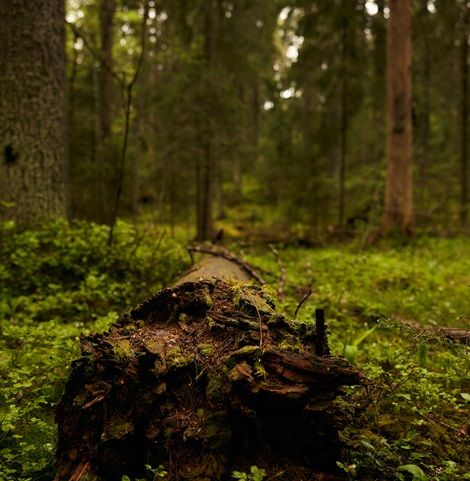
Ground deadwood protection
Deadwood is one of the most integral forest elements for enhancing biodiversity, which is why our forestry measures include careful preservation of existing deadwood on the ground.
In 2025, our performance increased from previous year, but is still below our target level. Continuous efforts in operations planning, as well as noticing and marking deadwood on site are crucial to improve our performance. In addition, communication and training with our contractors remains a key in preventing damages to ground deadwood.
|
|
2025 | 2024 | 2023 |
2022 |
2021* |
|
Performance |
85% | 83% | 74% |
79% |
97% |
|
Audited sites |
298 | 326 | 474 |
583 |
505 |
|
Number of deadwood logs |
2,331 | 1,961 | 448** |
293** |
368** |
|
Approved deadwood logs |
1,987 | 1,621 | 331** |
232** |
357** |
* In 2021, the indicator included also standing deadwood. To get more detailed data, standing deadwood has since been surveyed separately.
** During 2021–2023, we reported the indicator on a site-basis: number of approved sites / number of all sites with deadwood. In 2024, we changed the reporting to monitor the number of deadwood logs. The change is part of our harmonisation across countries.
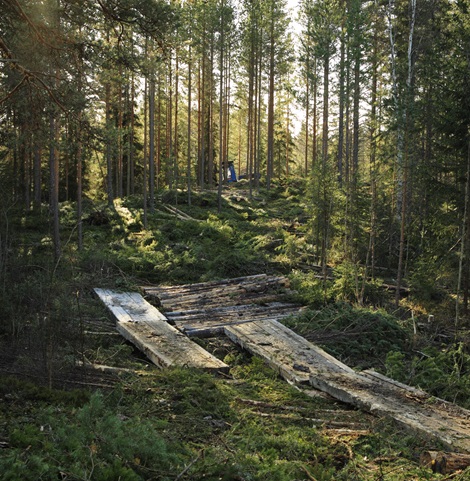
Soil and water protection
Soil and water constitute important habitats for versatile species living on land and in water, which is why we protect soil and water when crossing watercourses as well as avoid soil damages close to water.
In Finland, we measure how well this has been achieved on sites where there has been a need to cross the watercourse. In 2025, waters were protected or crossings avoided on 96% of our randomly sampled sites. While the overall performance is at a high level, our target is to have reach and maintain a 100 % result level on our operations.
|
|
2025 | 2024 |
2023 |
2022 |
2021 |
|
Performance |
96% | 100% | 97% |
98% |
91% |
|
Audited sites |
976 | 822 | 924 |
583 |
505 |
|
Sites where water needed to be crossed |
72 | 23 | 74 |
97 |
132 |
|
Sites where crossings approved or avoided |
69 | 23 | 72 |
95 |
120 |
Learn more about soil and water
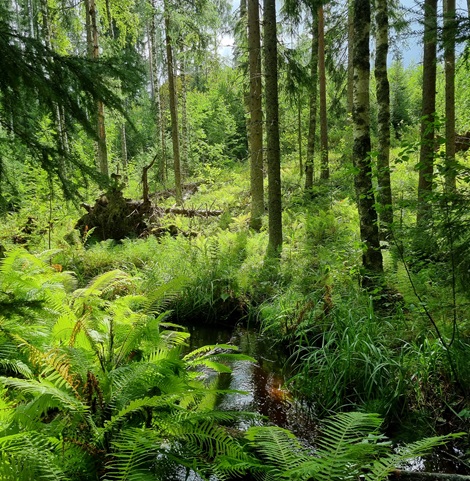
Prioritised habitat preservation
Prioritised habitats contain especially high nature values, requiring particularly careful protection. They do not occur in many forests, which is why their number in our data is small. Our main action is to preserve all prioritised habitats that are identified in the forests where we operate.
In 2025, this was realized on 94% of our sites in Finland, which means there has been a positive trend over the years. While this was a significant decrease from past years, the overall performance is still at a high level. We investigate each deviation, it's severity and root cause to further develop our practices, aiming for increased performance.
|
|
2025 | 2024 | 2023 |
2022 |
2021 |
|
Performance |
94% | 100% | 99% |
89% |
88% |
|
Audited sites |
976 | 822 | 924 |
583 |
505 |
|
Sites with prioritised habitats |
125 | 34 | 97 |
104 |
75 |
|
Approved sites |
118 | 34 | 96 |
93 |
66 |
Tree retention
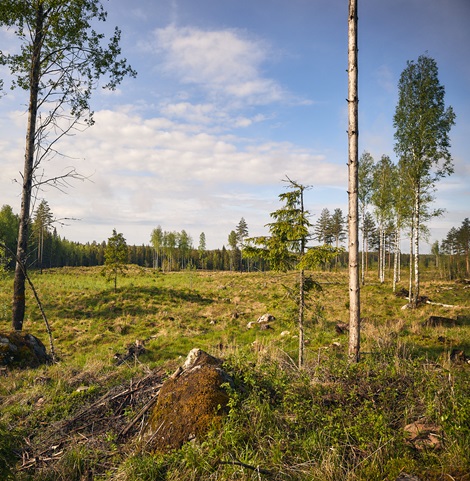
Retention trees are living trees left after harvesting to support biodiversity over the forest regeneration phase.
Our target is to leave at least 10 living retention trees per hectare in harvesting. In 2025, this was realized on 86% of our final felling sites. The average number of retention trees was over 15 per hectare, meaning that many sites exceeded the target and some were below.
|
|
2025 | 2024 | 2023 |
2022 |
2021 |
|
Performance |
86% | 83% | 81% |
80% |
89% |
|
Audited sites |
290 | 242 | 425 |
206 |
505 |
|
Approved sites |
250 | 201 | 343 |
165 |
449 |
Learn more about tree retention
Buffer zone preservation
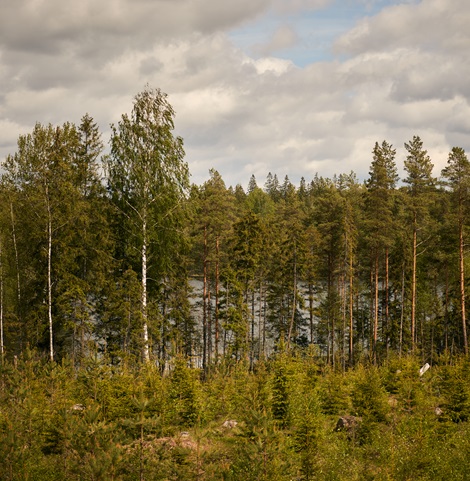
Riparian buffer zones are areas left around waters and wetlands to protect biodiversity around the water and sustain good water quality, as buffer zones protect the water from sediments and erosion.
In Finland, we leave riparian buffer zones that are at least 10 meters wide on average, with the minimum requirement of 5 meters everywhere. In 2025, this was realized on 95% of our sites where water bodies required a buffer zone. To improve, we put increased focus on buffer zone planning by developing the use of digital mapping tools as well as on training of personnel and contractors.
|
|
2025 | 2024 | 2023 |
2022 |
2021* |
|
Performance |
95% | 96% | 89% |
94% |
N/A |
|
Audited sites |
976 | 822 | 924 |
583 |
N/A |
|
Sites where buffer zones are required |
219 | 123 | 184 |
142 |
N/A |
|
Approved sites |
209 | 118 | 164 |
133 |
N/A |
* In 2021, buffer zone preservation was not reported as a separate indicator.
Learn more about buffer zonesSources

High stump creation
High stumps are trees cut at a few meters’ height to increase the amount of standing deadwood, helping restore more natural forest-like conditions in managed landscapes.
In Sweden, our practice is to create at least three high stumps per hectare in harvesting, and we report our performance on final felling sites. In 2025, this was realized on 89% of audited sites, which shows we have remained stable over the years but remain slightly below the target.
|
|
2025 | 2024 | 2023 |
2022 |
2021 |
|
Performance |
89% | 86% | 88% |
88% |
92% |
|
Audited sites |
100 | 59 | 58 |
58 |
60 |
|
Approved sites |
89 | 51 | 51 |
51 |
55 |
Ground deadwood protection
Deadwood is one of the most integral forest elements for enhancing biodiversity, which is why our forestry measures include careful preservation of existing deadwood on the ground.
In Sweden, we preserve natural deadwood logs that have a diameter of at least 15cm and have been dead for more than a year. Our monitoring is focused on the amount of observed logs that have not been damaged. 90% of the evaluated logs in final fellings were preserved in 2025, showing a return to performance level before 2024, but we still need to focus on deadwood preservation to maintain and increase our performance.
|
|
2025 | 2024 | 2023 |
2022 |
2021 |
|
Performance |
90% | 85% | 92% |
89% |
85% |
|
Audited sites |
100 | 59 | 58 |
58 |
60 |
|
Number of deadwood logs |
1691 | 741 | 160 |
260 |
330 |
|
Approved deadwood logs |
1522 | 633 | 147 |
231 |
282 |
Soil and water protection
Soil and water constitute important habitats for versatile species living on land and in water, which is why we protect soil and water when crossing watercourses as well as avoid soil damages close to water.
We report how many sites have required water crossings and how many of those have not had an impact on the watercourses. In 2025, the result was 80%. To improve, we continue to focus on a special forest machine driving technique, developed by us to avoid soil damages.
|
|
2025 | 2024 | 2023 |
2022 |
2021 |
|
Performance |
80% | 89% | 95% |
92% |
82% |
|
Audited sites |
193 | 119 | 116 |
118 |
119 |
|
Sites where water needed to be crossed |
45 | 35 | 41* | 24* | 39* |
|
Sites where crossings approved or avoided |
36 | 31 | 39* | 22* | 32* |
* During 2021–2023, we reported the indicator on a crossing-basis: number of approved water crossings / number of all water crossings. In 2024, we changed the reporting to monitor the number of sites that have water crossings. The change is part of our harmonisation across countries.
Learn more about soil and water
Prioritised habitat preservation
Prioritised habitats contain especially high nature values, requiring particularly careful protection. They do not occur in many forests, which is why their number in our data is small. Our main action is to preserve all prioritised habitats that are identified in the forests where we operate.
We report how many sites have contained prioritised habitats and on how many sites we have avoided damage to the habitats. In 2025, the result was 100%. This is a major improvement in comparison to previous year, and it is a clear sign that our training and feedback both to our personnel and contractors has been effective.
|
|
2025 | 2024 | 2023 |
2022 |
2021 |
|
Performance |
100% | 86% | 96% |
78% |
89% |
|
Audited sites |
193 | 119 | 116 |
118 |
119 |
|
Sites with prioritised habitats |
40 | 22 | 49* |
50* |
417* |
|
Approved sites |
40 | 19 | 47* |
39* |
372* |
* During 2021–2023, we reported the indicator on a habitat-basis: number of approved prioritised habitats / number of all prioritised habitats on the audited sites. In 2024, we changed the reporting to monitor the number of sites containing prioritised habitats. The change is part of our harmonisation across countries.
Tree retention
Retention trees are living trees left after harvesting to support biodiversity over the forest regeneration phase.
In, Sweden, our target is to leave at least 10 trees per hectare in harvesting, and we report our performance on final felling sites. In 2025, this was realized on 94% of the sites, meaning that there was a slight decline in comparison to previous years, which we aim to rectify to maintain our high performance rates in the future.
|
|
2025 | 2024 | 2023 |
2022 |
2021 |
|
Performance |
94% | 97% | 97% |
98% |
88% |
|
Audited sites |
100 | 59 | 58 |
59 |
60 |
|
Approved sites |
94 | 57 | 56 |
58 |
53 |
Learn more about tree retention
Buffer zone preservation
Riparian buffer zones are areas left around waters and wetlands to protect biodiversity around the water and sustain good water quality, as buffer zones protect the water from sediments and erosion.
In Sweden, we leave buffer zones according to the forestry best practice, where the width of the zone depends on the site. For instance, we leave wider zones if the surrounding forest is wet or has higher biodiversity values.
We report how many sites have contained water bodies that require buffer zones and on how many sites we have preserved these buffer zones correctly. In 2025, the result was 90%. To improve, we continue monitoring our performance as well as training and giving feedback to our personnel and contractors.
|
|
2025 | 2024 | 2023 |
2022 |
2021** |
|
Performance |
90% | 88% | 95% |
92% |
N/A |
|
Audited sites |
193 | 119 | 116 |
118 |
N/A |
|
Sites where buffer zones are required |
104 | 74 | 125 | 122 | N/A |
|
Approved sites |
94 | 65 | 119 | 112 | N/A |
* During 2022–2023, we reported the indicator on a buffer zone-basis: number of approved buffer zones / number of all buffer zones on the audited sites. In 2024, we changed the reporting to monitor the number of sites containing water bodies that require buffer zones. The change is part of our harmonisation across country units.
** Buffer zone preservation was a new indicator in 2022, and hence comparison data from 2021 is not available.
Sources

High stump creation
High stumps are trees cut at a few meters’ height to increase the amount of standing deadwood, helping restore more natural forest-like conditions in managed landscapes.
In the Baltics, high stump creation is not part of the current practise due to the high amount of natural deadwood. Based on our monitoring in 2025, the amount of all natural deadwood amounted to 12.4 dead trees per hectare. This indicates that deadwood doesn’t need to be created on all sites, but we should focus creating high stumps on those sites where standing deadwood doesn’t occur naturally.
We have piloted high stump creation in the Baltics and in 2025 monitored 33 sites where there was not enough natural standing deadwood (less than 5 trees / ha). 27 sites were approved (82%) and six had room for improvement. On average, we created 1.99 high stumps per hectare on sites where there was not enough natural standing deadwood.
Ground deadwood protection
Deadwood is one of the most integral forest elements for enhancing biodiversity, which is why our forestry measures include careful preservation of existing deadwood on the ground.
In 2025, our performance increased to 98%, which was a major increase in comparison to previous years. Our aim is to keep our performance at a high level also in the future.
|
|
2025 | 2024 | 2023 |
2022 |
2021 |
|
Performance |
98% | 90% | 88% |
91% |
88% |
|
Audited sites |
48 | 55 | 56 |
46 |
42 |
|
Number of deadwood logs |
600 | 942 | 43* |
35* |
42* |
|
Approved deadwood logs |
586 | 847 | 38* |
32* |
37* |
* During 2021–2023, we reported the indicator on a site-basis: number of approved sites / number of all sites with deadwood. In 2024, we changed the reporting to monitor the number of deadwood logs. The change is part of our harmonisation across countries.
Soil and water protection
Soil and water constitute important habitats for versatile species living on land and in water, which is why we protect soil and water when crossing watercourses as well as avoid soil damages close to water.
In 2025, there were no sites in our audits in which water was crossed. Our audit sites are selected at random, which means that due to relatively small sample size, no sites with crossings were audited. However, based on previous years’ performance, we continue to collaborate with our harvesting partners, communicate actively with forest owners, and provide trainings both for partners and employees to continuously improve our performance.
|
|
2025 | 2024 | 2023 |
2022 |
2021 |
|
Performance |
NA | 75% | 88% |
82% |
74% |
|
Audited sites |
57 | 60 | 56 |
46 |
42 |
|
Sites where water needed to be crossed |
NA | 8 | 16* | 11* | 42* |
|
Sites where crossings approved or avoided |
NA | 6 | 14* | 9* | 31* |
* During 2021–2023, we reported the indicator on a site-basis, meaning that we reported the amount of sites with no damage close to water bodies / number of all sites with water bodies. In 2024, we changed the reporting to monitor the number of sites that have water crossings. The change is part of our harmonisation across countries.
Prioritised habitat preservation
Prioritised habitats contain especially high nature values that require particularly careful protection, such as areas inhabited by endangered species.
Prioritised habitat preservation is not reported for the Baltics: due to their scarcity in the forests overall, we have been able to focus harvesting on areas where there are no prioritised habitats.
Tree retention
Retention trees are living trees left after harvesting to support biodiversity over the forest regeneration phase.
In the Baltics, we aim to leave at least 10 retention trees per hectare during final fellings. In 2025, the required amount of retention trees were left on 96% of the audited sites, indicating an upward trend throughout the years.
|
|
2025 | 2024 | 2023 |
2022 |
2021 |
|
Performance |
96% | 93% | 91% |
88% |
79% |
|
Audited sites |
48 | 55 | 47 |
33 |
42 |
|
Approved sites |
46 | 51 | 43 |
29 |
33 |
Learn more about tree retention
Buffer zone preservation
Riparian buffer zones are areas left around waters and wetlands to protect biodiversity around the water and sustain good water quality, as buffer zones protect the water from sediments and erosion.
In the Baltics, we leave buffer zones to protect waters, in line with legislation and our company guidelines in each country. The number of these areas in our sample pools is quite small, as our operations in the Baltics are mostly done away from waterbodies. In 2025, there was only one audited site with buffer zones, which is why the performance rate is marked as NA in the table below.
|
|
2025 | 2024 | 2023 | 2022 | 2021* |
|
Performance |
NA | 79% | 88% |
92% |
N/A |
|
Audited sites |
57 | 60 | 56 |
46 |
N/A |
|
Sites where buffer zones are required |
1 | 14 | 8 |
12 |
N/A |
|
Approved sites |
1 | 11 | 7 |
11 |
N/A |
* Buffer zone preservation was a new indicator in 2022, and hence comparison data from 2021 is not available
Sources

Biodiversity education hub

High stump creation
High stumps are trees cut at a few meters’ height to increase the amount of deadwood and thereby contribute to restoring more natural forest-like conditions in managed landscapes. Deadwood is a vital habitat for many species, and high stumps created by us are new deadwood (as opposed to natural deadwood).
In harvested areas, high stumps enhance biodiversity by providing standing deadwood that is exposed to sunlight for a long time. High stumps can be created during harvesting by the forest machine operator, and naturally broken trunks are left on site as high stumps. As the bark loosens and the high stump rots, various species of insects follow each other in inhabiting them. It is therefore important that high stumps are left in place as the new forest becomes established and ages.
Different species of insects and birds, for example, prefer the high stumps of different tree species. The red-listed beetle Peltis grossa is an example of a species that can frequently be found in artificial high stumps of spruce or birch. This beetle normally relies on deadwood that has been damaged by spruce bark beetles. When such wood is removed from forests to protect it from further bark beetle attacks, Peltis grossa loses a potential habitat, which can be replaced by artificial high stumps.

Ground deadwood protection
Deadwood is one of the most integral forest elements for enhancing biodiversity, as various species rely on it. Active forestry measures are used to increase the amount of deadwood in production forests.
Many species in boreal forests depend on deadwood, and there is a lack of deadwood in managed forests compared to natural forests overall. Deadwood on the ground provides a vital habitat, cover, and breeding ground for a multitude of species, especially many insects. As it decays, deadwood creates a nutritious ground for the next generation of trees. Therefore, it’s crucial that we preserve and protect existing deadwood from damage.
For instance, deadwood-dependent beetles are a group of species that benefits from forest harvesting, as most of these species (c. 65%) prefer sun-exposed environments. Particularly many beetle species that thrive on the deadwood of aspen prefer open habitats. Only 5% of these beetles can prosper in shadowy environments inside the forest. In contrast, 40% of beetles on the deadwood of spruce prefer shadowy environments.

Soil and water protection
Water and the soil around it constitute important habitats for versatile species living on land and in water. The area around waters is usually rich with vibrant species that differ from the surrounding forest. Some micro-organisms living in water, on the other hand, play a crucial role in maintaining good water quality.
Therefore, it’s integral that we avoid causing any damage directly to water or soil close to waters, as this that could lead to silting, erosion, or emissions of harmful substances to waters. The driving of harvesting machines in the forest requires careful planning to avoid damages.
First and foremost, we aim not to cross watercourses or drive on wet soil. This is done to avoid soil damages close to water – such as imprints by machinery that would make the soil more sensitive to erosion. If driving cannot be avoided, temporary bridges are built from trees on-site to cross watercourses and the soil is protected with logs and branches. In some cases, prefabricated bridge elements can also be used. Any damage that leads to increased discharge of sediment into watercourses and lakes is unacceptable. The same applies to changing the stretching of a watercourse and swamping or damming near it.

Prioritised habitat preservation
Prioritised habitats are habitats that contain high nature values and require particularly careful protection, which is also often required by law. The definition of a prioritised habitat depends on the country, but some examples are: natural forest streams, natural wetlands, groves, environments with high proportion of old trees or deadwood, and areas inhabited by endangered species.
Overall, these environments are rare by their nature, which is why they occur in small numbers in our data. When we identify areas of high nature values, it is integral that precautions are taken to properly preserve these areas, as they create important habitats for diverse species. These habitats can be different buffer zones, sites sensitive to soil damage (e.g. wetland forest or steep slopes in the terrain), or patches of forest with high biodiversity values, such as sites inhabited by endangered species.

Tree retention
Trees left on site after final felling are called retention trees: they can be single trees or groups of trees. Tree retention provides needed habitats for species that require living trees and thus supports biodiversity over the regeneration phase until the new trees have matured. The forest is always regenerated by planting bred seedlings, but retention trees also create seeds for natural tree seedlings.
Retention trees include both retention of single trees and the retention of patches of trees with high biodiversity values. Single retention trees are selected from the trees of the upper layer of various tree species with the largest diameter. Groups of retention trees, on the other hand, have been shown to increase the survival of spiders and red-listed mosses and lichens, for example.
We prioritise broad-leaved species and trees with marks from fire, cavities, or large branches. Large-diameter pine and spruce trees are valuable for biodiversity as is all deadwood, both standing and on the ground. Retention trees that eventually die serve as natural deadwood. Retention trees that live to become part of the new forest contribute to structural variation as they are much older than the other trees in the stand.

Buffer zone preservation
Riparian buffer zones refer to the edge of the water that is an area with diverse and valuable nature, differing from the surrounding environment. Buffer zones also protect the water from erosion, sediments, and other substances that might harm the quality of water and the important habitat the water provides for various species.
Therefore, riparian buffer zones are areas left around waters and wetlands to protect biodiversity. These buffer zones are preserved to protect the exceptional and abundant vegetation that grows naturally around waters and thus enhance the survival also of other species dependent on these areas. We leave riparian buffer zones to protect water quality and to ensure that our harvesting operations don't have a negative impact on nearby watercourses.