Active and adaptive biodiversity management
Biodiversity loss is a global challenge with very local solutions. This means that biodiversity in one area can have global effects, but it can be supported only with local actions in that particular area. This is why we consider biodiversity where operate, treating forests according to their ecological characteristics and striving for forest ecosystems, where biodiversity, growth, and carbon sink are in balance.
Advancing biodiversity with technology
Read more about some of our partnerships

Science-based actions for continuous progress
Biodiversity management means taking systematic actions to preserve crucial forest structures for biodiversity throughout the forestry cycle. Our forestry operations are planned and chosen according to their science-based benefits for biodiversity.We enhance biodiversity on landscape, habitat, and species levels.

Lanscapes

Habitats

Species
Biodiversity in Northern forests
In Northern forests, our actions are adapted based on the environment and our progress monitoring. Recognising regional and local perspectives is important, as the best results can be achieved when biodiversity management is adapted to the conditions of each forest site. Our biodiversity programmes for own forests in Sweden and for private forest owners define our actions to enhance biodiversity and go beyond legislation and certification requirements. These programmes are based on science and developed internally and together with external partners.
The actions that we take – in our own forests and the forests owned by other forest owners – consider several elements of biodiversity. They can be summarised under various focus areas:
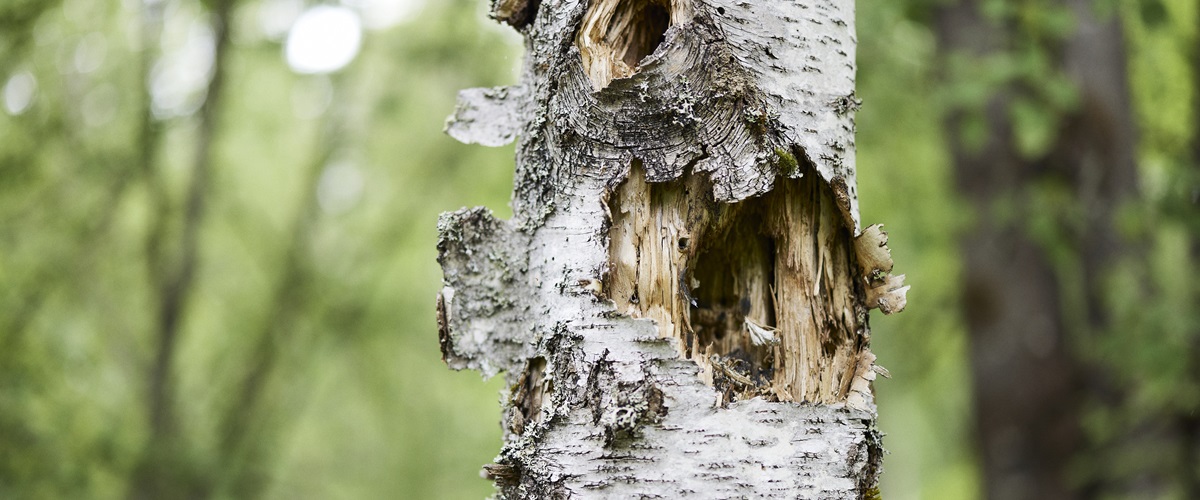
- creating and preserving deadwood
- restoring and preserving selected environments, such as wetlands or old forests
- biodiversity management actions, such as controlled burning, to promote special values
- leaving retention trees, nature value trees, and thickets
- protecting waters and their surrounding environments
- increasing the share of broadleaved trees and mixed forests
- protecting and promoting habitats for selected species
Biodiversity in own forests
In our own forests in Sweden, we implement active biodiversity management in areas for wood production and set-aside areas. Own forest land provides us with a great platform to make sustainable choices, explore alternative forestry methods, and pilot best practices for biodiversity. Long-term development of biodiversity as well as impact of harvesting are monitored with biodiversity indicators.
Our biodiversity program – for increased biological diversity in Stora Enso's own forests
We are part of the solution and we are acting with ambition. Our Biodiversity Program for Stora Enso’s own forest holdings in Sweden includes 20 concrete goals to enhance biodiversity by 2030.
This is not just a vision, it’s a plan built on actions that makes a real difference. We’re increasing the share of broadleaved trees, preserving and creating deadwood, restoring aquatic landscapes, and implementing targeted measures for species that need protection.

Active biodiversity management

Waters

Broadleaved trees

Deadwood

Habitats and species
Biodiversity services for forest owners
In Finland, Sweden, and the Baltics, Stora Enso works with private forest owners, providing them with the needed support and services for promoting biodiversity in their forests. Forest owners make the decisions regarding their own forests, but for instance Stora Enso’s biodiversity action programme in Finland aims to generate biodiversity awareness among forest owners and offer biodiversity services as well as restoration and protection opportunities. We encourage forest owners to certify their forests.
The impact of harvesting is monitored with biodiversity impact indicators in harvesting. Private forest owners can also use Stora Enso’s online customer portal to follow longer-term biodiversity data and key figures concerning their own forests.
The biodiversity action programme in Finland includes various actions
in four focus areas

Deadwood & tree retention

Water protection

Habitats

Conservation & restoration
Biodiversity in South American tree plantations
Stora Enso owns tree plantations in joint ventures: Veracel with Suzano in Brazil and Montes del Plata with Arauco in Uruguay. These plantations are managed as a mosaic area for wood production and biodiversity: biodiversity is protected and restored in dedicated set-aside areas.
Both joint ventures have their own separate biodiversity programmes but with similar focus areas and biodiversity indicators: progress is monitored with biodiversity indicators for tree plantations. Stora Enso’s leased plantations in Guangxi, China fall currently out of this scope: development is on-going to integrate the biodiversity management actions under Stora Enso’s biodiversity leadership programme.

Ecological corridors

Restoration

Promoting native species

Ecosystem protection

Integrated land-use management


