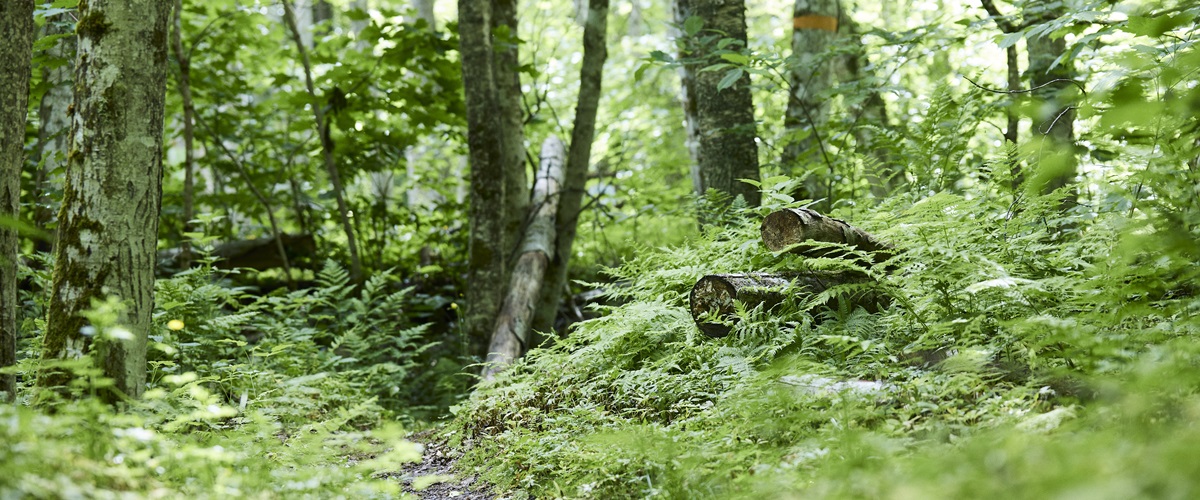
Healthy thriving forests
and sustainable wood supply are the lifeline of our business
Forests are amazing ecosystems. They use carbon dioxide from the
atmosphere to grow, forming natural carbon sinks that help to mitigate climate
change. They constitute the most important reservoir for terrestrial
biodiversity, creating homes for various species. And they provide wood for
renewable materials that store carbon during their lifetime, grow back and replace non-renewable alternatives,
helping societies transform towards a more biobased economy for the needs of a
growing population.
At the same time, forests are impacted by changes in the environment and climate as well as becoming the focus for a range of external expectations. The challenges to adapt forests and society to climate change and halt biodiversity loss frame the sustainable forest management of today. We contribute to tackling climate change and nature loss by keeping our forests healthy and resilient, increasing long-term growth and yield, ensuring forest regeneration after final fellings, and safeguarding and enhancing biodiversity.
Where do we source wood?
We source wood from our own forests in Sweden, joint-venture plantations in South America as well as leased plantations in China. In addition to owned and leased lands, we procure wood from other forest owners in Northern Europe and suppliers in Central Europe.Own forest Sweden
-
In Sweden, Stora Enso owns 1.4 million hectares of land. Out of this, 1.1 million ha is productive forest land.
-
Own forest holdings allow us to make faster choices and explore different forestry methods to enhance biodiversity, growth, and carbon sink.
-
While primarily used for production, some forests are set aside for nature conservation. Protected areas total to 448,000 ha.
-
Our own forest land also offers stability and adds value to our wood supply.
Northern forest owners
-
In Finland, Sweden, and the Baltics, Stora Enso procures wood also from private forest owners and other wood suppliers.
-
We support forest owners in sustainable forest management, share expertise, and encourage them to certify their forests.
-
Stora Enso owns 41% of Tornator that has forests in Finland , Estonia, and Romania. These areas cover 667,000 ha; 65,000 ha; and 12,000 ha respectively.
-
Do you own forest in Finland, Sweden, or the Baltics and want to sell your wood? Are you looking for support in sustainable forest management? Contact us.
Tree plantations
-
In South America, Stora Enso owns plantations in joint ventures in Brazil and Uruguay.
-
In Brazil, Stora Enso and Suzano have a 50/50 joint venture called Veracel. These plantations contain 209,000 ha, of which 82,000 ha planted for pulp production. Protected areas total to 105,000 ha.
-
In Uruguay, the Montes del Plata pulp mill is a 50/50 joint venture between Stora Enso and Arauco. The plantations contain 190,000 ha, of which 110,000 ha is planted for pulp production. Protected areas total to 77,000 ha.
-
In China, Stora Enso leases about 62,000 hectares of land for eucalyptus plantations in the Guangxi province. Protected areas total to 7,600 ha.
Central Europe
-
In Central Europe, Stora Enso sources certified wood from various suppliers.
-
Although we don’t manage the forests ourselves, we make sure that the wood we source is either certified or otherwise from audited and tracked sources that consider environmental and social aspects of sustainability.
2
million hectares of owned and leased
forests and plantations globally
~13
million m3 annual
forest growth in own
forests and plantations
~10
million m3 annual
harvesting in own
forests and plantations
Forestry for the environment: biodiversity, climate, and resource efficiency
Sustainable forest management safeguards forest health and protects biodiversity, while providing our customers with renewable resources that can substitute fossil-based materials and help mitigate climate change.

Growing healthy forests form carbon sinks: they absorb CO2 and mitigate climate change. At the same time, we need to adapt forests to the changing climate. Well-managed and mixed forests can make entire ecosystems more resilient to negative impacts of climate change, such as pests and extreme weather.
Wood-based materials store carbon also when recycled. CO2 is released when the product decomposes or is used for bioenergy. This carbon is captured again by regenerated forests after final felling. We also work to reduce the emissions of wood transportation with various methods, such as floating and electrification.

15
science-based
biodiversity indicators
99%
certification coverage
on our owned & managed land
Digitalisation offers solutions for forest management and forest owners
Digitalisation and AI change forest and wood supply management, enabling more targeted environmental actions. To develop our operations further for enhanced environmental performance, we need to continue developing our digital tools and services as well as ensure seamless data transfer from planning to operations and back.Stora Enso leverages the latest technologies in three ways.

For forest owners and digital wood trade
In Finland, Stora Enso offers forest owners a digital portal to manage their forest, track data, and handle their customer relationship with Stora Enso – also remotely. In the portal, forest owners can see diverse facts about their forests, monitor biodiversity, and explore yield. We continuously develop these tools to meet forest owners’ needs and address environmental considerations.

For sustainable forest management
Stora Enso’s Precision Forestry technology uses advanced tools to create a forest digital twin by integrating data from various sources into one platform. Tools such as satellites, drones and harvesting machines with sensor technology can capture forest data that would otherwise remain unavailable on the same scale: for instance, tree species and size, forest health, and deadwood. This data, combined with traditional forest inventories, enables tailored forestry planning, enhanced post-harvest monitoring, early damage detection, as well as targeted biodiversity management.

For environmental data and analytics
To improve our operations and biodiversity practices as well as to reduce emissions, we need accurate data to make informed decisions. We use digital tools for streamlined and consistent data collection: We have a specific application to monitor biodiversity preservation after harvesting, and to calculate and reduce emissions, we have created a seamless data transfer from our vehicles to our reporting systems. In addition, we are currently developing our pioneering framework for modelling biodiversity impacts in in collaboration with the International Union for Nature Conservation (IUCN).


