Veracel - Environmental, Social, and Governance
Questions and answers
Over the past decades, Stora Enso’s journey together with Veracel, our joint operation, located in southern Bahia, Brazil, has been shaped by curiosity, collaboration, and a commitment to doing good for people and the planet. This Q&A is a curated collection of the questions we've encountered, reflecting the complexity of the operating context and the evolving expectations of society. We share these questions and answers not only to inform, but to encourage dialogue and deepen understanding.
We are proud of our legacy and humble about the challenges ahead. We recognise that forestry, sustainability, and community engagement are never static; they require continuous learning, adaptation, and respect for diverse perspectives. This is why we remain open, transparent, and committed to improving, together with our partners and stakeholders.
Local context and stakeholders
- What are the main social and environmental challenges in southern Bahia?
Veracel is located in Southern Bahia, within the Atlantic rainforest biome, which is a socioeconomic and biodiversity hotspot.
The region faces deep-rooted social challenges such as ongoing Indigenous land claims and demarcation processes, economic seasonality, high unemployment, and rising violence. These issues shape Veracel’s operating context and its role in promoting local development.
This region is home to an extraordinary diversity of endemic species and has suffered a significant loss of forest cover between the 1960’s and 1980’s due to logging and conversion to pasture, making it a global priority for forest conservation and restoration.
- What stakeholder groups are affected by these social and environmental challenges?
Veracel engages with a range of stakeholders in the region, including communities in settlements, social movements of landless rural workers, Indigenous peoples, traditional communities, and farmers. These groups are directly affected by socioeconomic vulnerabilities and land-tenure challenges that are common in the region.
- How does Veracel view its role in addressing these challenges?
For Veracel, contributing to social and environmental development in the territory is essential. The company’s role is to support initiatives that help communities and generate income/build livelihoods, particularly through family farming. Furthermore, Veracel aims to ensure zero deforestation by planting only on previously human-altered land. Every new area is rigorously vetted to meet legal and certification standards, with no history of native forest conversion.
- How does Veracel engage with stakeholder groups to support regional development?
For more than 3 decades, Veracel has engaged with stakeholders through long-standing partnerships with communities, NGOs, and public institutions to support education, culture, infrastructure, and sustainable livelihoods. It collaborates with and supports organisations like BIOMAS, Forest Stewardship Council (FSC®), the Humpback Whale Institute, and Promab to lead biodiversity initiatives such as agroforestry nurseries, sustainable beekeeping, and native species protection.
The company fosters regional development by supporting income-generating projects. For example, since 2005, it has helped beekeepers in southern Bahia produce honey in eucalyptus forests, promoting both livelihoods and sustainable land use. Veracel also works with the Federal University of Southern Bahia, for example, to develop technologies like essential oil extraction from native plants, creating new economic opportunities.
Human rights
- Does Veracel adhere to international Human Rights standards?
Yes, Veracel’s approach and commitment to respecting Human Rights are outlined in its human rights statement. Veracel commits to respecting and promoting human rights across all its operations and, if necessary, remedies negative impacts. It references its dedication to employees, suppliers, local communities, Indigenous peoples, and other traditional groups. The approach is guided by the United Nations Guiding Principles on Business and Human Rights (UNGP) and aligns with Brazilian legislation and international standards. The Veracel Supplier Code of Conduct clearly defines expectations for suppliers to respect human rights.
- How is Veracel progressing on its commitment to respect human rights?
Working with Human rights is nothing new at Veracel. The company has a long-standing commitment to addressing human rights-related topics, such as land conflicts, safety, community relations and engagement with Indigenous peoples, among others. In 2022, Veracel introduced a structured approach to its human rights work, including a series of assessments, internal guidelines, targeted awareness-raising efforts, and enhanced stakeholder engagement. At the end of 2024, they published their first human rights statement. In 2025, Veracel conducted a new Human Rights Impact Assessment (HRIA) across its operations and neighbouring communities and reviewed its due diligence framework to ensure alignment with evolving standards and best practices.
- What does Veracel do to prevent child labour and modern slavery risk in their operations/ supply chain?
The company adopts policies and practices to avoid child labour and help combat modern slavery in its own operations and supply chains. For instance, the sourcing team has received awareness-raising training to help detect risks, and supplier assessments are carried out on high-risk supply chains. The team at Veracel also actively promotes children’s rights in their work with vulnerable communities and helps raise awareness of the importance of education to combat the risks of exploitation.
- How does Veracel promote dignity and respect?
Veracel values the dignity of all people and bases its relationships with its stakeholders on transparency, respect for life, freedom of expression, opinion and religion, and the right to health, education, work and tradition.
Recognising differences is key to transparency and dialogue and a first step to establishing respectful relationships. This lays the foundation for the initiatives to promote the appreciation of diversity and inclusion inside and outside the company.
Veracel has a zero-tolerance policy for any discrimination or harassment and offers an anonymous reporting channel with a dedicated service to combat violence against women.
Land tenure
- Does Veracel have legal documentation proving its ownership of all the land it owns, including both productive and preserved areas?
Veracel holds documentation for the legitimate possession of all its land, whether used for production or set aside for environmental preservation. These records are publicly available and clearly demonstrate the legal process through which the land was acquired. It’s a process rooted in compliance with all applicable laws, reflecting Veracel’s long-standing commitment to responsible and lawful land stewardship. Read more in Veracel's Sustainability Report 2024.
- What measures does Veracel take to prevent land grabbing and uphold ethical land use in its forest operations?
Veracel ensures legal compliance through transparent operations, environmental responsibility, and respect for people and communities. All land is legally documented, and the company operates with valid environmental licenses. The company maintains open communication with stakeholders and offers anonymous reporting channels to uphold ethics and improve practices.
91% of land owned by Veracel is certified by FSC® and CERFLOR/PEFC, with annual external audits on forest operations, confirming its commitment to responsible forest management. The audit summaries are public and available on the certification systems' websites.
- How does Veracel maintain communication and transparency with stakeholders regarding land tenure issues?
In its more than 30 years of operation in Southern Bahia, Veracel has ensured dialogue with all interested parties and has anonymous reporting channels and "Contact Us", always being open to questions, concerns and feedback from all its stakeholders.
- How does Veracel address illegal occupation of land, logging or other illegal activities?
Veracel continues to promote dialogue with all stakeholders and is committed to lawful, peaceful, and transparent practices across its operations.
Legal conflicts involving illegal activities are specific cases and do not represent the company’s overall relationship with communities in the region. These situations are handled within the scope of the law and, when needed, referred to the appropriate judicial authorities.
Community engagement
- How many communities does Veracel engage with in its operational territory?
Veracel maintains good relationships with the communities surrounding its operations, built on structured dialogue, cooperation and long-term social initiatives. The company engages with more than 150 communities, with a third of those directly adjacent to its operations.
- What strategies and plans support Veracel’s long-term community relationship?
Veracel fosters strong community ties through two key plans:
- The Tactical Operation Plan, which guides responsible forestry practices based on socio-environmental impacts.
- The Territorial Development Plan which coordinates actions with local partners and communities to promote regional development.
Through regular dialogue with councils, committees, and community leaders, Veracel listens actively and integrates feedback into its decision-making. These efforts, along with targeted social investments, help build lasting, trust-based relationships.
- How does Veracel invest in and support local communities?
Veracel supports communities in the region on several fronts. It ranges from sponsoring cultural and sporting events, donating school supplies to students of Indigenous origin, to investing in family farming projects. One such family farming project is the Agrovida initiative, which aims to support farmers in producing food for family consumption and selling the surplus in local and regional markets. Furthermore, supporting sustainable agriculture initiatives and agroforestry, which combines the cultivation of native trees with regenerative agricultural crops and, in many cases, also with the raising of small animals in a single space.
Each year, approximately R$10 million is invested in social support initiatives throughout the region. More than 1,500 families are benefiting from Veracel's initiatives. Read more in Veracel’s Sustainability report.
Social movements and settlements
- What is the landless movement?
The landless movement in Brazil advocates for agrarian reform and social justice, often using land occupation as a form of protest to push for access to land and government action. It is one of the most influential social movements in Latin America. It emerged in the 1980s in response to deep-rooted inequality in land distribution, where a small number of landowners controlled vast areas while millions of rural workers remained landless.
Some areas of Veracel’s land have been illegally occupied since 2008. While Veracel is not the root cause of the challenges faced by landless communities, the company recognises the complexity of the issue. It aims to be part of the local solution, working through dialogue, legal channels, and partnerships to support peaceful resolutions and sustainable development.
- Why is it important for Veracel to reach agreements with social movements and government institutions to support land settlements?
Veracel’s agreements with social movements and government institutions are important because they help resolve land conflicts, support sustainable development, and strengthen community relations. These partnerships have led to the transfer of around 20,000 hectares of land to landless families, improved livelihoods through training and support, and reduced unauthorised land occupations. They also align with Veracel’s sustainability goals and contribute to social stability and socio-economic development in the region.
- What agreements has Veracel made with social movements and government institutions to support land settlement?
Veracel has worked since 2011 to resolve land conflicts and support landless families in southern Bahia. Through agreements with social movements and government institutions, including INCRA (the National Institute for Colonisation and Agrarian Reform) and the Government of Bahia, the company has facilitated land transfer and provided resources to promote sustainable rural development.
- 2012 – First sustainable settlement initiative was launched, covering approximately 16,500 hectares. The possession of these areas has been granted to landless families and social movements; the formal land transfer processes led by the federal government (INCRA) are still ongoing.
- 2018 – In the second agreement, approximately 3,500 hectares. Veracel signed with four social movements, allowing the sale of previously occupied areas, with a payment term of 20 years.
In total, Veracel has voluntarily transferred approximately 20,000 hectares to support 1800 landless families. As of the end of 2024, only 139 hectares (0.1%) of Veracel’s productive land remained occupied by movements not involved in agreements. Read more about Sustainable resettlement in Brazil.
- What are the impacts of the settlement agreements?
Veracel’s settlement agreements have had several positive impacts:
- Land Redistribution: Veracel has made around 20,000 hectares of land available to landless families in southern Bahia, expanding access to productive land and helping resolve long-standing land conflicts.
- Improved Livelihoods: Families received support for food production, training, and access to markets, improving income and food security.
- Conflict Reduction: Unauthorised land occupations have significantly decreased, contributing to greater social stability.
- Environmental Balance: Veracel maintained conservation efforts alongside land transfers, preserving large areas of Atlantic rainforest.
- Institutional Collaboration: Partnerships with government and universities have strengthened technical and educational support for settlements.
- How are families benefiting from these agreements?
More than 1,800 families are benefiting from the two agreements. In addition to access to land, Veracel supports such as initiatives to help structure these communities and develop income generation.
Local communities
Indigenous Communities
- How does Veracel ensure respectful, transparent, and culturally sensitive dialogue with Indigenous villages?
Engaging and maintaining good relationships with Indigenous communities is a high priority for Veracel. The local team is in regular contact with community representatives to agree on actions and next steps. These actions are developed collaboratively with the Indigenous communities and aim to promote active dialogue and preserve the traditional culture. Veracel supports educational, cultural and infrastructure programmes for local Indigenous communities (Pataxó and Tupinambá), home to approximately 25,000 people.
To ensure respectful, transparent, and culturally sensitive dialogue, Veracel engages with FUNAI (The National Foundation for Indigenous Peoples), the Brazilian governmental body that represents and protects the rights of Indigenous Peoples.
- What specific initiatives does Veracel support to preserve Indigenous culture and improve the quality of life?
Some specific examples are:
- Promote climate resilience through dialogue, knowledge sharing, and breeding native species
- Supporting events that value culture, such as Araguaksã
- Spaces for dialogue between leaders, such as meetings of the council of Indigenous leaders
- The Pataxó Indigenous Games
- The construction of kigemes (cultural centres)
- Supports the implementation of a water collection system for irrigation in the municipality of Santa Cruz Cabrália
- The donation of school supplies to more than 5,000 students and approximately 200 teachers in Indigenous communities.
Find out more about Veracel’s community engagement in Veracel’s Sustainability report.
- What planting restrictions has Veracel adopted to protect areas near Indigenous territories?
Veracel does not plant on lands legally recognised as Indigenous. Veracel has also established a policy of abstaining from planting eucalyptus in a 10 km wide strip of the coast in support of the operating licences, which covers the municipalities of Porto Seguro, Santa Cruz Cabrália and Belmonte, where most Indigenous communities are located, to preserve the natural characteristics of the southern region of Bahia.
- Does Veracel operate on legally recognised Indigenous land?
Veracel acknowledges the history of claims and does not plant in areas recognised as Indigenous lands and understands the complexity and sensitivity involved in the demarcation of Indigenous lands in southern Bahia.
Veracel commits to Indigenous leaders to respect and not oppose the processes of recognising Indigenous lands after all legal steps have been completed. Veracel maintains active collaboration with authorities and Indigenous community representatives to ensure respect for the rights of all involved.
Other traditional communities
- What other traditional communities are present in Veracels' business activities?
Veracel are active in areas home to several other traditional communities. These communities play a vital role in the local cultural and environmental landscape.
- Fishermen rely on coastal and river ecosystems for their livelihoods, using traditional knowledge and sustainable practices passed down through generations. Veracel engages in dialogue to support safety at sea, environmental conservation, and to protect water resources critical to these communities.
- Family farmers contribute to local food systems and biodiversity through small-scale agriculture, often using agroecological methods. Veracel works to promote coexistence and supports initiatives that strengthen rural development and food security.
- Quilombola communities are descendants of Afro-Brazilian resistance groups that maintain strong cultural identities and historical ties to their territories. Veracel does not operate on or in the vicinity of Quilombola lands.
Legal procedures
- What is the position of Veracel on land-related legal disputes?
Veracel welcomes the ongoing regulatory development for ownership of land, as well as court decisions that settle long-running judicial disputes and clarify business conditions.
- What is the status and background of the environmental licensing lawsuit involving Veracel, mentioned in the Stora Enso Annual Report?
In July 2008, a federal judge in Brazil questioned the validity of environmental permits issued by the State of Bahia for Veracel’s operations, a joint operation of Stora Enso. The ruling required Veracel to reforest parts of its plantations with native trees and imposed a potential fine of BRL 20 million (approximately EUR 3 million). Veracel disputed the decision, maintaining that it operated in full compliance with Brazilian laws and had obtained all necessary environmental and operational licenses from the relevant authorities. An appeal was filed, and in November 2008, the Federal Court suspended the effects of the initial ruling.
After years of legal proceedings, on July 10, 2025, Veracel's appeal was upheld by the Federal Court, and the regularity of all the environmental licensing of the project was recognised, and the fine of BRL 20 (EUR 3) million was annulled. The decision was not appealed to the Higher Courts, and the ruling is final. No provisions have been recorded in Veracel’s or Stora Enso’s accounts for the reforestation or the possible fine.
Read more:
Stora Enso - Interim report Q3 2025
Stora Enso - Annual Report 2024
- How is Veracel involved in the Barra Velha Indigenous land demarcation case?
Demarcation is the official process of defining and marking land boundaries to distinguish areas for conservation, agriculture, Indigenous territories, or other legal uses. It ensures proper land management and compliance with Brazilian environmental and land laws.
Veracel owns 3,219 hectares of land that was acquired prior to the Indigenous claim regarding the expansion of the Barra Velha Indigenous Reserve. Veracel respects the process and remains fully committed to complying with the final decision, while continuing to engage responsibly with local communities and stakeholders.
Forest conservation
- What is the total area of Veracel’s forestry operations, and how is it divided among eucalyptus plantations and set-aside areas?
Veracel operates in 11 municipalities in southern Bahia and covers an area of almost 210,000 hectares. Approximately 85,000 hectares are commercial eucalyptus plantations, and more than 100,000 hectares are dedicated as environmental set-aside areas. These protected areas include both voluntary conservation and legally mandated zones, such as legal reserves and permanent preservation areas.
- What certifications has Veracel obtained for its sustainable forest management, and what restoration efforts are underway?
Veracel has 91% of its own land certified by the FSC® since 2008 and has held the CERFLOR sustainable forest management certification, endorsed by PEFC, since 2005.
Veracel has actively engaged in restoration since 1994, replanting up to 400 hectares of native Atlantic rainforest each year on degraded land. In 2025, the company signed a landmark restoration agreement with Biomas to restore a further 1,200 hectares, financed through future revenues from carbon credits, reinforcing its commitment to long-term ecosystem recovery and climate resilience. Read more about biodiversity indicators for plantations.
- What forestry practices and planting strategies does Veracel use to promote biodiversity?
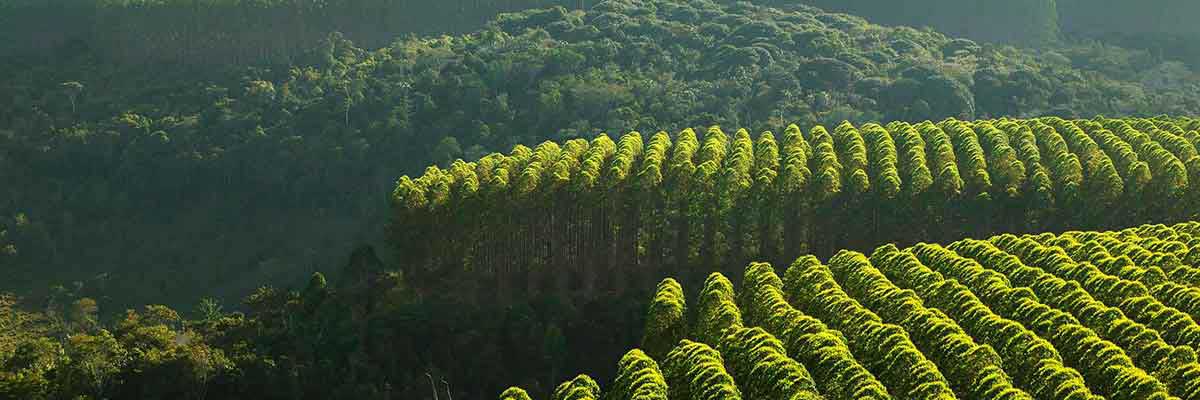
The company employs a mosaic planting strategy, ensuring a balanced landscape that combines eucalyptus plantations with native vegetation in a mosaic pattern, thereby promoting biodiversity and creating ecological corridors for wildlife. Its planting technique, known as minimum cultivation, minimises soil disturbance, protecting it from erosion, maintaining moisture and preventing sedimentation in water bodies, ensuring the water quality in the region.
- How are Veracel contributing to protecting endangered species and supporting environmental research in the region?
Veracel’s plantation model, which allocates half of the land area for conservation and restoration of native Atlantic rainforest, provides a basis for habitat and species conservation. These conservation and restoration areas are spatially arranged to enhance habitat connectivity and facilitate species movement.
Veracel manages eight High Conservation Areas, landscapes with exceptional environmental and/or social importance that are prioritised for conservation. The most important of these areas is the 6,060 ha Private Natural Heritage Reserve (RPPN Estação Veracel), which is nationally and by UNESCO recognised for its ecological significance. This reserve provides critical habitat for endangered species, including the harpy eagle and the jaguar. Beyond habitat preservation, Veracel actively supports ongoing scientific research, reinforcing the ecological value of the area and contributing to broader environmental knowledge and conservation efforts.
The Veracel Station is recognised as a UNESCO World Heritage Site and received the FSC® Ecosystem Services certificate (C017612) in 2019, becoming the first Brazilian company in the forest and pulp sector to earn this distinction.
Climate and nature responsibility
- How does Veracel account for and report its carbon emissions and removals?
Veracel focuses on reducing CO2 emissions in its silvicultural, harvesting and transportation operations by utilising renewable energy sources, such as solar power. The company uses the GHG Protocol and includes scopes 1 and 2 and, material scope 3 categories to carry out this inventory.
- What are Veracel’s goals and practices for forest restoration and biodiversity conservation?
Veracel contributes to biodiversity by protecting 100,000 hectares of land and restoring approximately 400 hectares of native Atlantic rainforest each year. The company also has several actions to combat deforestation and adopts a strict policy of sustainable forest management. The practices of mosaic planting keep native forests on plateaus and intersperse them with eucalyptus forests. They help prevent erosion, protect the soil, and maintain the integrity of local biomes, allowing the circulation of fauna and providing for the maintenance of ecosystems present in the territory.
- How does Veracel ensure traceability of the origin of forestry raw materials and compliance with legal and socio-environmental requirements in its own areas and those of partners?
Veracel’s forest management practices, along with those of its forest producers, have been certified under the Forest Stewardship Council (FSC), Forest Management and Chain of Custody standards since 2008. Additionally, they have been certified under the CERFLOR (Brazilian Forest Certification Program), Forest Management and Chain of Custody standards since 2007. Veracel certification information is publicly available on the Veracel website, and the FSC and CERFLOR.
The company also rigorously and continuously monitors its supply chain. All wood Veracel purchases are traceable to their origin. In collaboration with Stora Enso, Veracel has worked to ensure compliance with the EU Deforestation Regulation (EUDR), reinforcing its commitment to responsible sourcing and transparency.
Read more in the Stora Enso division Biomaterials due diligence summary on EUDR joint operations (2025).
- How does Veracel contribute to land use and vegetation cover monitoring in southern Bahia?
Veracel, in partnership with Suzano, helps finance the Bahia Forest Forum, which monitors land use and vegetation cover in southern and extreme southern Bahia. Operating since 2014, the platform uses an independent methodology to track changes transparently and publicly. It provides spatial data from land use and land cover mapping dating back to 1990. Monitoring is based on high-resolution satellite imagery, complemented by field verification, to classify land use.
The data provided by the platform supports the monitoring of the evolution of the company's environmental actions regarding the reforestation of its territory, and the development opportunities for the preservation of vital ecosystems in the region.
Environmental responsibility
- How does Veracel ensure its environmental practices comply with Brazilian legislation and promote sustainability?
Veracel integrates climate and biodiversity risks into its environmental governance and compliance by incorporating these factors into operational planning, management systems, and reporting processes. To manage, mitigate, and offset environmental impacts, Veracel maintains a series of procedures. In 2024, this effort was recognised through the renewal of the ISO 14001 certification for its plantation.
- How does Veracel monitor the impact of agrochemicals used in its eucalyptus plantation?
Agrochemicals are fertilisers, herbicides and pesticides. Veracel has been monitoring micro-catchments in its area of operations for over 15 years in partnership with the micro-catchment monitoring program (Promab) of the Institute of Forestry Research and Studies (IPEF). Two water samples are taken 30 and 60 days after agrochemicals or pesticides are applied to check for residues. This monitoring has been carried out since 2006, and the presence of agrochemical residues has never been detected.
- How does Veracel monitor the water usage of its eucalyptus plantations?
Veracel monitors the water usage of its eucalyptus plantations through science-based environmental indicators. As part of the Promab micro-catchment monitoring program, Veracel is monitoring the water balance of its eucalyptus plantations. Fifteen years of monitoring show that the water balance in sustainably managed eucalyptus plantations is comparable to that of the native Atlantic rainforest. Read more about water quality KPI as part of biodiversity indicators.
- How does Veracel protect soil health and water resources in its eucalyptus plantations?
Veracel uses sustainable forestry practices to protect soil and water throughout its eucalyptus plantations. This includes such as detailed soil mapping, minimum cultivation techniques that reduce soil disturbance, preserve organic matter, and maintain moisture - helping prevent erosion and silting of nearby watercourses. Roads are strategically built to minimise erosion, and equipment is handled carefully to avoid soil compaction. Additionally, buffer zones are maintained near water sources, ensuring that operations safeguard both soil health and water quality.


